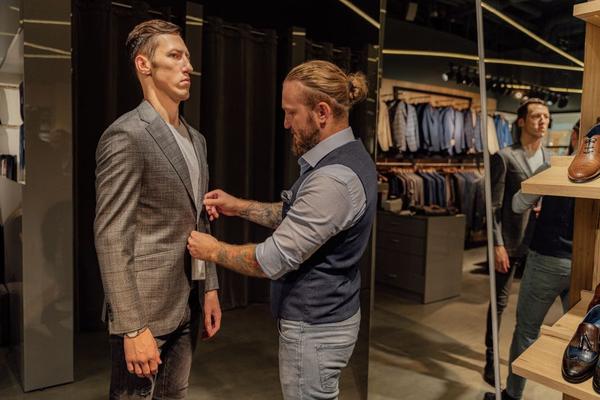

A men’s clothing size guide is most useful when it starts with the body, not the label. A “medium” in one brand can fit differently in another, and two pairs of pants with the same stated waist may feel different because of rise, cut, or fabric. Take accurate measurements, compare them with the retailer’s own chart, and then use the garment’s cut to fine-tune the fit.
You need a soft tape measure and a mirror. Measure over thin clothing, keep the tape level without pulling it tight, and write the numbers down. If possible, ask someone to help with chest and sleeve measurements.
Start with the measurements that matter most
Most men’s body measurements used for everyday clothing in the United States are taken in inches. Focus on chest, neck, natural waist, hip or seat, inseam, and sleeve length.
• Chest: Wrap the tape around the fullest part of the chest, under the armpits and across the shoulder blades, with your arms relaxed.
• Neck: Measure around the base of the neck where a shirt collar sits. Keep the tape comfortably close rather than tight.
• Natural waist: Measure near the navel or where your body naturally creases when you bend sideways. This may not be where your jeans sit.
• Hip or seat: Measure around the fullest part of the seat while standing naturally.
• Inseam: Measure from the crotch area down the inside of the leg to your preferred hem point. A well-fitting pair of pants laid flat can also be used.
• Sleeve: Many dress-shirt brands measure from the center back of the neck, across the shoulder, and down a slightly bent arm to the wrist. Check the retailer’s method because conventions differ.
How men’s shirt sizing works
Casual shirts commonly use S, M, L, and XL. A men’s size chart usually connects those labels to chest and sometimes neck or waist ranges, but fit names matter too. Slim, regular, relaxed, and oversized cuts can feel very different in the same labeled size.
Dress shirts are more specific. Many US menswear sizes use neck and sleeve measurements, such as 16/34-35. The first number generally refers to the collar, while the second refers to sleeve length or a sleeve-length range. If the collar fits but the body feels loose, changing the cut is often better than choosing a smaller collar.
Button the collar and make sure it feels comfortable. The front placket should lie relatively flat, and shoulder seams should sit near the shoulder edge unless the design uses dropped shoulders.
Related reading: men’s shirt fit guide
Choosing pants and jeans by waist, rise, and inseam
Pants labels can be confusing because a stated waist size may not equal your natural waist measurement or the garment’s exact waistband measurement. A pair labeled 34 may sit lower on the hips or be cut differently from another brand’s 34. Treat the label as a starting point.
For jeans and chinos, a common format is W x L, such as 34 x 32. “W” is the labeled waist and “L” is the inseam. Compare your measurements with the brand chart, then consider rise. Low-, mid-, and high-rise pants sit at different points on the body, so the same waist label can feel different.
Suppose your best-fitting jeans are marked 33 x 32, while your measured natural waist is 35 inches. That does not automatically mean your measuring is wrong. Measure the jeans flat across the waistband, double that number, note where they sit on your body, and compare those dimensions with the new brand’s chart. This is more useful than the label alone.
Related reading: how jeans should fit men
Jackets, blazers, and suits need more than one number
Traditional suit and sport-coat sizing often starts with a chest number paired with a length such as Short, Regular, or Long. A size 40 jacket is generally built around an approximately 40-inch chest, but the finished garment includes ease and the exact cut varies. Your chest measurement is a reference point, not a guarantee.
Two men with the same chest can need different lengths because of torso or arm length. Prioritize a clean shoulder fit because shoulders are difficult to alter. The collar should sit close to the shirt collar, and the front should button without strong pulling lines.
Some suits come as fixed jacket-and-trouser sets, while others allow separate sizes. If your chest and waist proportions do not match the standard pairing, separates may provide a better starting fit.
Related reading: suit jacket fit guide
How to use a size chart without getting misled
A common mistake when learning how to measure for clothes is assuming every chart measures the same thing. One retailer may publish body measurements, while another lists finished garment dimensions. A shirt with a 44-inch garment chest is not necessarily designed for a 44-inch body because it may include several inches of ease.
Look for wording such as “body measurements,” “garment measurements,” or “finished measurements.” If the chart is unclear, consider the model’s listed size, garment cut, fabric stretch, fit notes, and return policy.
If you fall between sizes, prioritize the area that is hardest to compromise. For jackets, shoulders and chest usually come first. For pants, seat, rise, and waistband comfort matter more than a slightly long hem. For casual shirts, shoulder and chest fit generally matter more than small differences in length.
Keep a simple personal sizing record
Save your measurements on your phone along with sizes and cuts that already fit well. A note such as “Brand A slim shirt: M, good shoulders, tight chest” is more useful than remembering only that you wear medium. Recheck after a noticeable weight change or before buying expensive formalwear.
Frequently asked questions
Are men’s clothing sizes standard across US brands?
No. Brands use different patterns, fit models, ease allowances, and cuts. Use the retailer’s current chart instead of assuming one labeled size will fit identically everywhere.
Should I measure my body or a garment that already fits?
Both can help. Body measurements are best for charts based on body dimensions. Measuring a favorite garment is especially useful when a retailer provides finished garment measurements.
What if my chest and waist point to different sizes?
Choose according to the garment and the hardest area to alter. For jackets, prioritize shoulders and chest. For shirts, allow enough room through the neck, shoulders, and chest. For pants, prioritize waistband, seat, and rise.
How tight should the measuring tape be?
Keep it flat and comfortably close without compressing the skin. Stand naturally, do not hold your breath, and measure twice if the number seems uncertain.
A better fit starts with better information
The most reliable men’s clothing size guide combines accurate measurements, the brand’s own chart, and an understanding of how the garment is meant to fit. Labels are useful shorthand, but they are not universal measurements. Once you know your chest, neck, waist, hip, inseam, and sleeve numbers, you can compare products more intelligently and catch sizing problems before ordering.
Keep those measurements handy, check whether a chart uses body or garment dimensions, and pay attention to cut, rise, stretch, and proportions. That preparation can mean fewer returns, less guessing, and a better fit.