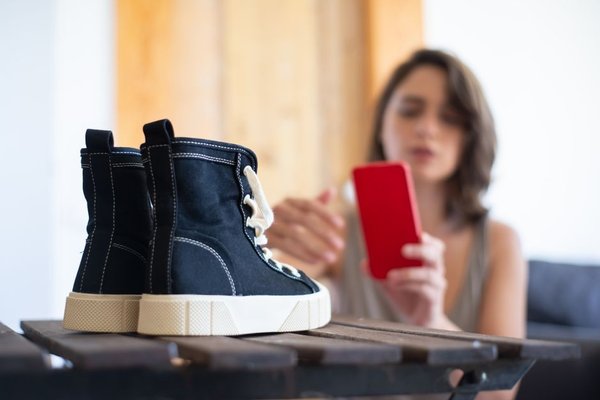

Shopping for shoes online is convenient until the box arrives and the shoes pinch, slip, or feel nothing like your usual size. The number printed inside a shoe is only a starting point. To learn how to shop for shoes online successfully, combine your own measurements with the brand’s sizing information, the shape of the shoe, and reports from people who have actually worn it.
Start With Fresh Foot Measurements
Do not assume the size you bought last year still fits. Feet can change over time, and your left and right feet may differ. Measuring both feet gives you a better starting point than relying on a familiar label. The American Podiatric Medical Association recommends fitting the larger foot and trying shoes later in the day, when feet may swell slightly.
How to measure feet accurately
Put a piece of paper on a hard floor with one edge against a wall. Wear the type of socks you will use with the shoes. Stand on the paper with your heel against the wall and your weight evenly distributed. Mark the end of your longest toe, which is not always the big toe. Measure the distance from the wall to the mark. Repeat on the other foot.
For width, measure across the widest part of your forefoot while standing. Ask someone to help if marking the edges is awkward. Keep the measurements in centimetres or millimetres and note which foot is larger. Use these numbers when comparing shoes rather than guessing from an old pair.
Understand the Brand’s Shoe Size Chart
A generic conversion chart cannot guarantee accurate online shoe sizing. Brands use different lasts, the foot-shaped forms used to construct shoes. Some models within the same brand fit differently, too. Find the manufacturer’s shoe size chart for the specific product and compare it with the length of your larger foot.
Check what the chart measures. Foot length is not the same as an insole’s length or a shoe’s exterior dimensions. Also confirm whether sizes are listed in US men’s, US women’s, UK, or EU measurements. A size 8 in one system is not equivalent to a size 8 in another.
If your foot falls between sizes, read the brand’s fit recommendation before choosing. Going bigger automatically may produce heel slip; going smaller may crowd your toes. Contact the retailer if the chart and product description disagree.
Look Beyond Length to Width and Shape
A shoe may be long enough yet too narrow across the ball of your foot. Consult a shoe width guide if you regularly experience pinching, rubbing at the little toe, or excess room along the sides. Width labels vary, but standard US men’s D and women’s B are common examples rather than universal standards.
Study overhead product photos. A pointed or tapered toe box can squeeze a broad forefoot even when the overall length is correct. A wide toe box may be comfortable for some shoppers but loose on a narrow foot. Instep height matters as well: people with high insteps may need extra room beneath the laces.
Do not treat extra length as a substitute for width. Buying a longer version of a narrow shoe can leave your toes compressed and your heel slipping. A wider fitting or a differently shaped model usually makes more sense.
Factor In Materials and Shoe Type
Leather may soften and become more flexible, but it should not be expected to stretch significantly in length. Knitted uppers can accommodate some variations in foot shape; stiff synthetic panels and structured dress shoes tend to have less give. Pay attention to seams and overlays around sensitive areas.
Consider how you will wear the pair. Walking shoes should feel secure without squeezing your toes. Running shoes need adequate forefoot space and midfoot hold. Boots require room for your intended socks, while slip-on loafers must stay on without painfully gripping your foot. If you wear orthotics, look for removable insoles and sufficient depth.
Use Customer Reviews to Spot Fit Patterns
Ignore ratings that say only that a shoe is beautiful or comfortable. Useful reviews identify the buyer’s usual size, foot width, and exact fit issue. Repeated mentions of a narrow forefoot, stiff upper, or slipping heel can tell you more than the average star score.
Check that reviewers are discussing the same model and version. Look for model-specific fit notes on the brand’s website before making a decision.
Example: A Loafer That Falls Between Sizes
Imagine your larger foot measures 25.4 centimetres, placing you between sizes on a manufacturer’s chart. You like a leather loafer, but photographs show a narrow, pointed front. Instead of simply ordering the larger size, compare width options and look for reviews mentioning pressure near the little toe.
If the larger size would create heel slip while the toe shape remains narrow, the better choice may be another model altogether. That decision saves more trouble than relying on a painful break-in period.
Check Return Terms Before Ordering
Read the return window, postage charges, refund rules, and exclusions for sale items. Confirm you can try the shoes indoors without losing return eligibility. Keep the packaging and tags until you know the pair fits. International returns can be particularly expensive. Related reading on choosing everyday sneakers, matching socks to shoes, and caring for leather footwear can help you compare designs.
When returns are free, trying two nearby sizes may be practical if the retailer permits it. Otherwise, careful measurements and one question to customer support can prevent unnecessary shipping costs.
Test New Shoes Indoors
Try on both shoes with the socks you intend to wear. Stand, walk, and turn on a clean indoor surface. Your toes should move comfortably, the heel should remain reasonably secure, and the upper should not press painfully across the forefoot or instep.
A little movement depends on the style, but constant heel lifting or toe gripping is a warning. Shoes should feel comfortable from the beginning; do not count on a painful break-in period. Persistent pain or numbness is a reason to seek advice from a qualified foot-care professional.
Frequently Asked Questions
Should I always order half a size bigger online?
No. Use measurements and model-specific fit information. A larger shoe does not necessarily solve width problems and can cause slipping.
Can I rely on my usual shoe size?
Only as a reference. Sizes and shapes vary between brands and models, so check the current size chart each time.
Which foot should determine my shoe size?
Use the larger foot as your starting point. You may be able to adjust the smaller side with lacing or an appropriate insert.
Do leather shoes stretch enough to fix a tight fit?
Leather can soften, but you should not expect it to correct insufficient length or severe pressure. Choose a comfortable fit from the outset.
Choose Fit Over the Number on the Box
Good online shoe shopping is a process of eliminating mismatches. Measure both feet, check the manufacturer’s chart, assess width and toe shape, and read detailed fit reviews. Verify the return policy before paying, then test the shoes indoors. A careful choice is more valuable than finding your usual number on a beautiful pair.